
🕯️ Holy Week in Jerez: History, Faith, and Tradition in the Heart of Andalusia
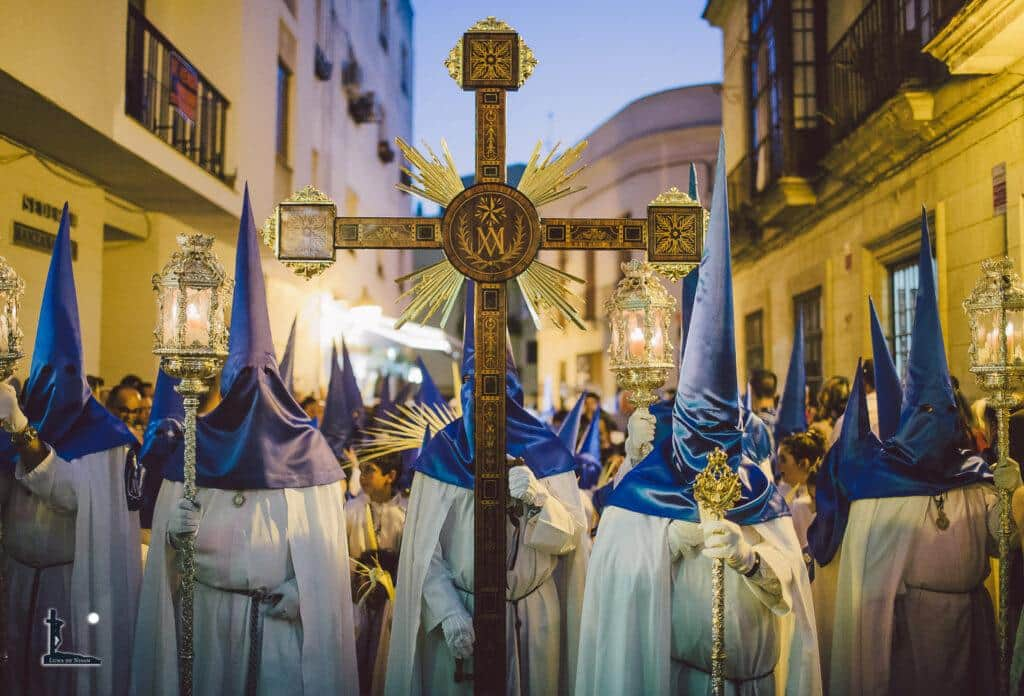
Holy Week (Semana Santa) in Jerez de la Frontera is much more than a commemoration; it is the reflection of the living history of a city that has known how to merge faith with Baroque art and the purest sentiment of its neighborhoods. Declared an Event of National Tourist Interest, it is one of the richest and most solemn displays in all of Andalusia, which you can experience by staying at our apartments.
📜 A Journey Through History: Origins and Evolution
The seed of our Holy Week was planted after the Reconquista, but it was in the 16th century when the first brotherhoods were born. Thanks to the patronage of great families and the wine industry, the brotherhoods surrounded themselves with the best imagery and embroidery, elevating their "pasos" (floats) to authentic walking monuments. Many of these historic temples are key stops in our Jerez Sightseeing Guide.
✝️ The Brotherhoods: History and Devotion
La Estrella (Palm Sunday)
Historically linked to the San José School, it represents light and hope. It is the brotherhood of "La Salle," where the purity of children singing to the Virgin is one of the hallmarks of Jerez's youth.
El Transporte (Palm Sunday)
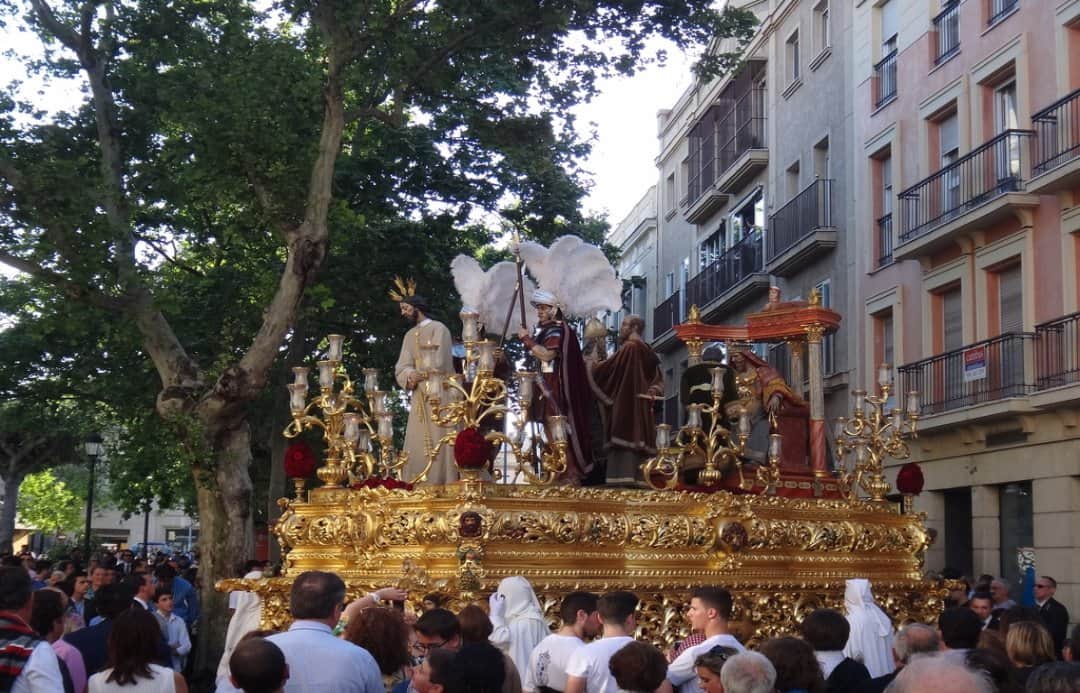
Based in the Basilica of La Merced, it is the brotherhood of transport workers and Mercedarians. Its imposing "misterio" float represents the Scorn of Herod, one of the most regal scenes of our Holy Week. Its Marian figure is Mother of God of Mercy, one of the city's great devotions, defining the prestige of this day under her majestic canopy.
La Viga (Holy Monday)
The Brotherhood of the Cathedral. Its main figure is the Christ of La Viga, a 15th-century Gothic carving, the oldest in the city. It represents the sobriety and heritage of the old collegiate church.
La Santa Cena (Holy Monday)
From the Parish of San Marcos, it offers one of the most classic and imposing mystery floats in Andalusia, representing the institution of the Eucharist with exceptional artistic mastery.

Amor y Sacrificio (Holy Monday)
One of the most followed brotherhoods. No music, only the sound of the wooden staffs and the rhythmic footsteps of the brothers. It represents pure sorrow and absolute austerity.
Los Judíos de San Mateo (Holy Tuesday)

The Brotherhood of "El Desconsuelo" is the soul of our neighborhood. Its Baroque ensemble is an invaluable jewel, and its presence in San Mateo is the very essence of our tradition. Discover more about our surroundings in our Jerez Neighborhood Guide.
El Prendimiento (Holy Wednesday)

"El Prendi" is the essence of the Santiago neighborhood. Its image is an icon of Jerez culture, and its procession through Calle Ancha is a fundamental pillar of our identity.
Las Tres Caídas (Holy Wednesday)
Residing in the Diocesan Sanctuary of San Lucas. The Christ of Health holds boundless devotion in Jerez; he is the "Lord of San Lucas." His brotherhood is the heir to an ancient and deep faith.
El Nazareno & Santo Crucifijo (The Night of Jesus)
The "Lord of Jerez" draws thousands of pilgrims behind his cross. In contrast, the Santo Crucifijo represents absolute silence and the maximum elegance of the early morning hours.

El Cristo (Good Friday)
The Christ of the Expiration in San Telmo. Its bond with the neighborhood and its characteristic natural hair mane are the emotional closing of the Passion in Jerez.

Santa Marta (Holy Saturday)

Our pride in San Mateo. A brotherhood with unique iconography that processes through the streets of our neighborhood, providing the closeness of the local community.
🏠 Experience the Passion from the heart of San Mateo
At Antonio Parra Tourist Apartments, Santa Marta and Los Judíos are our neighborhood neighbors. Experience Holy Week without a car, feeling the heartbeat of history at every step.
✨ BOOK NOW FOR 2026📍 Passion Landmarks: Moments for Reflection
Discover the places and moments where emotion becomes palpable every day. Between moments, don't forget to recharge in the establishments of our Jerez Tabancos Guide.
PALM SUNDAY
- La Estrella: Its departure, with the children of La Salle singing emotionally at the start of its route.

- La Merced: The imposing departure of the Virgin from her Basilica under the gaze of the city's Patroness.
HOLY MONDAY
- La Santa Cena: Its distinguished passage through the Plaza de la Compañía.
- Amor y Sacrificio: The sepulchral silence broken only by the sharp strike of the wooden staffs.

HOLY TUESDAY
- Los Judíos de San Mateo: Crossing the Plaza del Mercado, in the heart of our neighborhood and right in front of our accommodations.

HOLY WEDNESDAY
- El Prendimiento: The Santiago neighborhood devoted to "El Prendi" during its return to the temple.
- Las Tres Caídas: The reflection and immense devotion to the Christ of Health in the San Lucas area.

THE NIGHT OF JESUS (DAWN)
- El Silencio: Its departure from the Parish of San Miguel in absolute darkness.
- El Nazareno: Its arrival at San Juan de Letrán with the first rays of the Good Friday sun.

GOOD FRIDAY
- Las Viñas: The famous "tumbaito" walk of its mystery float and seeing it return as it passes under the Arcos Street bridge.

HOLY SATURDAY
- Santa Marta: Processing with pride through the streets of our San Mateo neighborhood.
- La Piedad: The solemnity of the "Duelo" returning to its chapel through Tornería Street.